Things to Do · comparison
Best Views in Budapest
Choose Budapest viewpoints by direction, effort, access, weather, crowds and live operator conditions instead of chasing one universal ‘best’ panorama.

The short version
What matters
- The right view depends on what you want to see, how far you can walk and whether current conditions support the route.
- Use operator pages for paid terraces, Citadella access and hill services; use BudapestGO and the forecast for the real approach.
- Choose one viewpoint with time to arrive, look and leave safely rather than stacking every hill and rooftop into one day.
01
Choose a view by question, not by rank
There is no single best Budapest view for every traveller. A river-level view can explain the bridges and embankments; a Castle Hill terrace can frame Parliament across the Danube; a Gellért Hill viewpoint can show the city’s topography; a central tower can show rooflines; a Buda Hills route can give distance and green space. Begin with what you want to understand or photograph, then choose the effort and access route that lets you actually enjoy it.
A ranked list encourages an exhausting pattern: cross the city, take one picture, leave before looking, and repeat. A useful comparison does the opposite. It asks whether you need a central view, a broad hill panorama, a sunset direction, a short accessible stop, a paid vertical experience or an outdoor walk. One correct answer is enough for the day, and it can be different on a rainy Tuesday from a clear summer evening.
Sources: unesco-budapest, budapestinfo-attractions
02
Choose a river-level view for ease and detail
River-level promenades and bridges are useful when you want to read Budapest’s basic geography without a major climb. From the banks, the Danube, bridges, Castle Hill, Parliament and the relationship between Buda and Pest remain legible at a human scale. This is often the best choice for travellers with limited time, someone avoiding a hill, families with a pushchair, or a first evening when the group needs orientation rather than another ticketed interior.
A river view is not automatically step-free, uncrowded or weather-proof. Check the live route, surface and weather, keep clear of cyclists and other pedestrians, and do not stand in a narrow bridge or promenade flow for a long photo session. Use the view as a short pause between nearby places, then leave room for a meal, tram or direct return. The city does not need to be climbed to be understood.
Sources: bkk-go, bkk-accessibility, hungaromet-climate
03
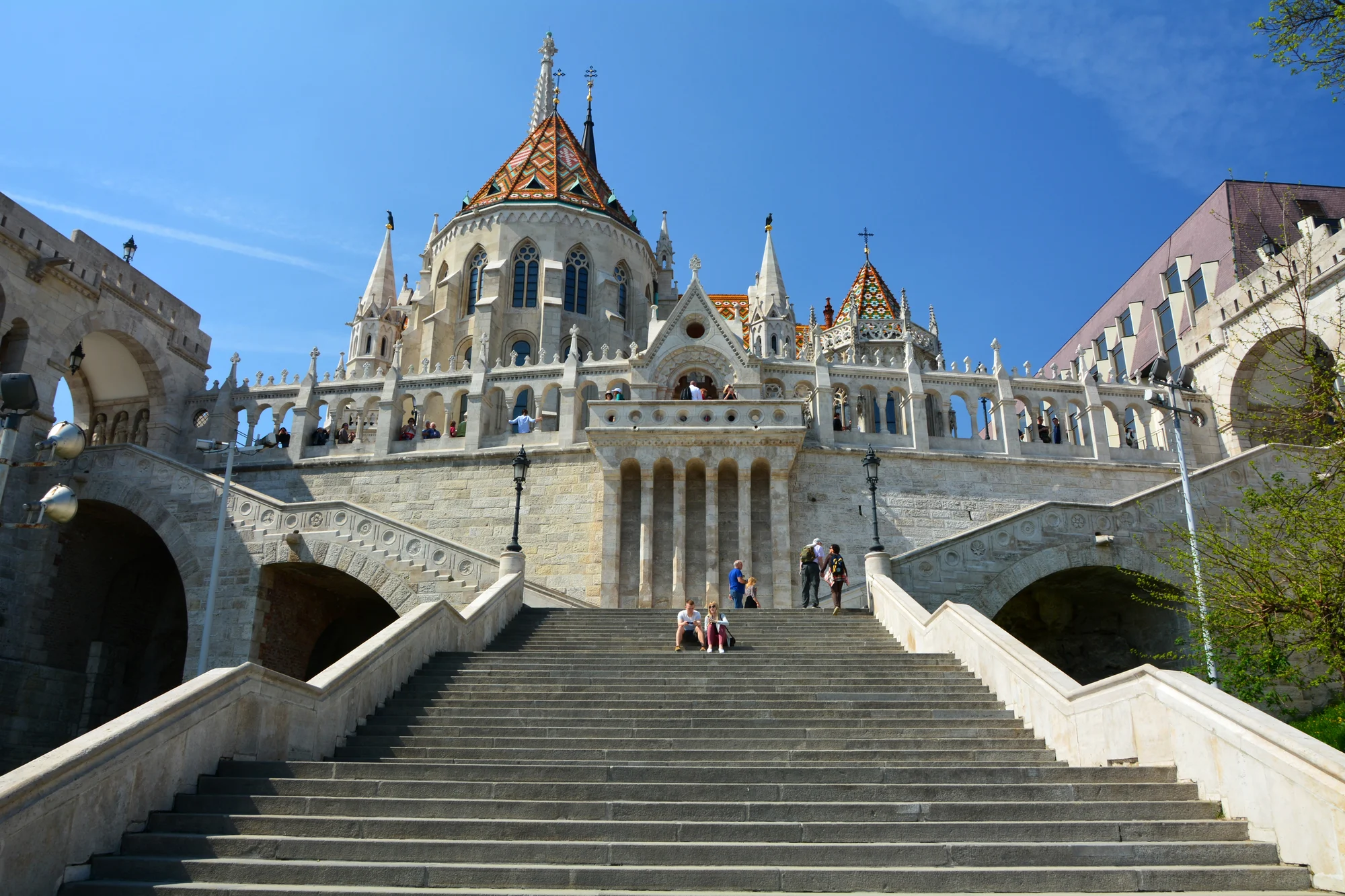
Choose Castle Hill for a Parliament-facing frame
Castle Hill works when you want a layered view toward the Danube and Pest, combined with a historic district walk, church exterior, museum court or terrace. It is not one single platform. A public street, palace district edge, Bastion terrace or another confirmed viewpoint can produce different sightlines and different levels of crowding. Choose one segment that supports the rest of the day rather than trying to chase every postcard angle.
Use the Castle District operator and BudapestGO for current access, works, tickets and transport before committing to a hill itinerary. Paving, slopes, queues, Funicular service and weather affect the practical route. If access or energy is limited, choose the lower city or a simpler hill approach. A good Castle Hill panorama comes from arriving with enough attention to look across the river, not from climbing every stair because the map says another viewpoint is close.
Sources: buda-castle-district, bkk-go, bkk-accessibility
04
Choose Gellért Hill or Citadella for topography
Gellért Hill and the Citadella area are useful when you want to see how the river bends, how Buda rises behind it and how Pest spreads beyond the bridges. The current Citadella operator publishes park, viewpoint and exhibition information separately; use its current page rather than treating old construction or access stories as fixed. The hill can be rewarding, but the route is an outdoor elevation decision, not a quick city-centre stop.
Be honest about slope, weather and time. Choose a lower viewpoint, one path or a direct Citadella visit when that is enough, and do not assume a hilltop panorama requires an all-day loop. Check live public transport, daylight and the forecast; carry water and use suitable footwear. If conditions turn difficult, a river-level or Castle District view may be better. The aim is perspective, not endurance.
Sources: citadella-official, bkk-go, hungaromet-climate, bkk-accessibility
05
Choose Basilica panorama for a central vertical view
A Basilica panorama can suit visitors who want a central-Pest rooftop perspective, compact streets and the city’s urban texture rather than a hill walk. It should be planned as a church and visitor experience with its own current opening, worship, ticket and terrace conditions. Check the official Basilica site for the exact day; a service, event, weather or visitor rule may change what is appropriate or available.
Do not use the panorama as a reason to rush through a living religious space. Arrive with margin, follow staff direction and choose another central street or river pause if the terrace is unavailable. For access needs, contact the operator about the specific route rather than assuming a central landmark has a universally workable vertical journey. A lower street view around the Basilica can still be valuable if the upper level does not fit the day.
Sources: st-stephens-basilica-official, bkk-accessibility, bkk-go
06
Choose the Buda Hills for distance and green space
The Buda Hills are useful when the desired view includes forest, a slower approach and a sense of distance from the central river corridor. The Zugliget Chairlift and Children’s Railway can be part of that route, but each has separate live operator, ticket and weather conditions. Treat them as possible connections, not guaranteed shortcuts. Choose one upper-hill purpose and one return before boarding any scenic transport.
This choice is best for a half day with suitable weather and energy, not a spare hour after a long city itinerary. Check service status, timetable, daylight and a safe return route. A short upper walk or a calm ride may be enough; there is no need to add every viewpoint, railway and forest path. If clouds or wind remove the long view, the landscape can still be enjoyable—or the sensible choice may be to return and use another city route.
Sources: zugliget-chairlift-official, childrens-railway, bkk-go, hungaromet-climate
07
Use light as a route condition
The same viewpoint changes with cloud, haze, rain, season and direction of light. Check the forecast and immediate conditions before travelling, then choose whether the day calls for a broad daytime view, a shorter sunset-oriented stop, an indoor cultural alternative or a river walk with changing light. Do not promise a particular colour, clear skyline or illuminated landmark; those are weather and city-condition outcomes, not itinerary guarantees.
Sunset can also make crowds, stairs and the return more complicated. Arrive early enough to orient yourselves, keep a safe exit route and do not stay in an isolated or unsuitable place simply because a photo opportunity feels imminent. If the sky is flat or the view is hazy, use the time to notice the city’s geometry and water instead. A useful view is not cancelled by imperfect light.
Sources: hungaromet-climate, bkk-go
08
Plan access from the actual route
‘Viewpoint’ is not an accessibility category. A scenic place may involve a slope, uneven paving, steps, a narrow terrace, a queue, a lift, exposed wind or a long transfer. Start with the specific operator or public-space information, then check BKK’s live accessibility resources for the route. Do not assume a popular panorama is appropriate for a mobility aid, pushchair, balance concern, fatigue, sensory need or fear of heights because a photograph makes it look simple.
Choose the view that works for the people travelling. That may be a river-level bench, a short castle street, a museum court, a church exterior or a transport view rather than the highest platform. A lower-effort view can give more time to look and talk, while a strenuous climb can consume every bit of attention. Access is not a footnote after the location is chosen; it is how the right viewpoint is selected.
Sources: bkk-accessibility, bkk-go, citadella-official, st-stephens-basilica-official
09
Avoid crowding the view and the people in it
A popular panorama is shared public space. Keep clear of paths, railings, worship areas, staff routes and the sightline of people who arrived to look without a camera crew around them. Take a quick personal photograph if permitted, then make room. Do not climb barriers, use a drone without legal permission, direct strangers out of the frame or treat a quiet hill or church terrace as a set for prolonged performance.
This matters especially at sunset and on small terraces, where everyone is working with limited space and changing light. A calm, respectful stop is more likely to be enjoyable for the whole group and leaves the viewpoint usable for residents, worshippers, workers and other visitors. The best souvenir is often a remembered direction and a few notes about what you saw, not a phone full of identical crowded images.
10
Choose a low-energy or low-mobility view
Some days call for a panorama that does not demand a steep climb, a long queue or a paid vertical route. River-level benches, public promenades, a short Castle District street, a tram approach or a museum court can provide a meaningful city view with far less strain. Begin with the energy and access needs of the group, then choose the angle. Do not prescribe a summit because the guide calls it iconic when someone would spend the rest of the day recovering from it.
Use live BKK information for the approach and ask an operator about a specific terrace, lift or entrance if it matters. A compact view can be paired with a nearby meal, indoor museum or direct return, giving the day time to settle. The comparison is not between ‘real’ and ‘inferior’ viewpoints; it is between routes that fit today’s bodies, weather and schedule and routes that use up the whole day before the looking begins.
Sources: bkk-accessibility, bkk-go, st-stephens-basilica-official, buda-castle-district
11
Choose a photo plan without chasing perfection
Photography benefits from a decision about direction and weather, but it should not turn travel companions into assistants for an endless location hunt. Choose one or two frames, arrive with a little margin and accept the city as it is: haze, construction, crowds, seasonal trees, boats and changing light are part of the lived panorama. Do not promise sunrise emptiness, golden hour or an illuminated landmark; conditions and public-space rules change.
If serious photography is the main purpose, separate it from a family or first-trip sightseeing schedule. Check whether a terrace, church or operator has specific rules, keep equipment compact and avoid blocking circulation. If the image does not work, leave with the route rather than sacrificing the evening to another queue. A calm walk and one honest frame usually tells more about Budapest than a perfect-looking image made by excluding everyone else from the shared view.
Sources: citadella-official, st-stephens-basilica-official, hungaromet-climate
12
Pair the view with one nearby purpose
A viewpoint becomes more useful when it connects to one nearby activity at the same geographic scale. A Castle Hill view can lead to one museum or district street; a central Basilica view can lead to a Pest walk or meal; a Gellért or Citadella view can lead to a short hill path or a direct descent; a river view can lead to a tram or promenade. Choose one, then stop. The pair should make the route more coherent, not add a second checklist.
This pairing also makes weather changes easier. If a hill view closes or cloud arrives, retain the nearby purpose; if a museum visit runs long, keep the outlook as a short optional pause. Do not place another timed attraction immediately after a panorama that may require queueing, stairs or a longer return. A little unscheduled space lets the group look slowly, change plans and leave the city’s geometry connected in memory rather than blurred into the next booking.
Sources: buda-castle-district, citadella-official, bkk-go
13
Plan the return before staying for evening light
An evening view can be worthwhile only when the route down or back is as clear as the way up. Check live transport, daylight, weather and the group’s energy before deciding to wait. Do not turn a dark descent, isolated path or closed operator gate into a photo problem. Choose viewpoints with a known return connection, keep the group together and leave early if conditions feel less comfortable than expected.
For a first trip, river-level or central views often offer the simplest evening exit. Higher hill views need a deliberate route, appropriate footwear and flexibility. The best after-dark panorama is the one the group can leave calmly, without rushing or guessing.
Sources: bkk-go, hungaromet-climate, citadella-official
14
Choose one viewpoint per half day
A city-wide view is cognitively rich: it can make the river, districts, bridges, hills and routes cohere. Give it time. Choose one main panorama for a half day and let nearby activity support it—a museum, street, meal, promenade or direct transport return. Avoid combining a Buda Hills journey, Gellért Hill, Castle Hill, a Basilica terrace and a river cruise as though they were quick additions to one another.
A smaller plan is also more resilient. If a ticket, weather condition, queue or access need changes, choose the next best view rather than trying to reproduce the exact route. This protects the trip from disappointment and prevents a desire for a ‘best’ photo from controlling every hour. Budapest has many valuable angles; the right one is the view that fits the day you actually have.
Sources: bkk-go, hungaromet-climate, buda-castle-district
15
Use the viewpoint day-of check
Before leaving, name the direction you want to see, the effort you can manage and the current operator or public-space source responsible for the route. Check weather, daylight, live transport, ticket or access conditions and one fallback. For a group, agree whether the view is a quick pause, a timed terrace or a hill walk; that decision prevents a vague ‘sunset’ hope from turning into confusion.
On the day, follow staff and public-space rules, choose safety and comfort over a perfect image, and let conditions change the route. If haze, crowds, closure or fatigue removes the first choice, take the prepared alternative. The best Budapest view is the one that gives the group a clear, calm way to understand the city—not a claim that one platform has defeated every other perspective.
Sources: citadella-official, buda-castle-district, st-stephens-basilica-official, bkk-go, hungaromet-climate
Evidence, not footnotes in the dark
Sources
- Citadella official visitor informationVárkapitányság Nonprofit Plc. · checked 9 July 2026
- Buda Castle Palace District official informationBudavári Palotanegyed · checked 9 July 2026
- St Stephen’s Basilica official visitor informationSt Stephen’s Basilica · checked 9 July 2026
- Zugliget Chairlift official operating informationBKV Zrt. · checked 9 July 2026
- Children’s Railway visitor informationChildren’s Railway, Budapest · checked 9 July 2026
- BudapestGOBKK · checked 9 July 2026
- BKK accessible transportBKK · checked 9 July 2026
- Budapest climate data seriesHungaroMet · checked 9 July 2026
- Budapest World Heritage listingUNESCO World Heritage Centre · checked 9 July 2026
- Budapest attractionsBudapest Info · checked 9 July 2026
- Buda Castle Funicular official operating informationBKV Zrt. · checked 9 July 2026