Things to Do · landmark
Buda Castle Guide
Plan Buda Castle as a palace complex: choose one museum or historic interior, connect the terraces and courts through a realistic hill approach, and check current works before travel.


Places, with bearings
Keep the city in view
Use the map for orientation, then use the linked guide and official sources for the decision that matters.
Mapped places
- Buda Castle Palace District
Palace and hilltop district with changing works, routes and visitor conditions. Choose one anchor and confirm the current approach before travelling uphill.
Open in OpenStreetMap ↗
Map data © OpenStreetMap contributors · Tiles © OpenFreeMap
The short version
What matters
- Treat Buda Castle as a large hilltop palace complex, not a single ticketed room or one fast photo stop.
- Choose one interior or museum priority, then leave time for courts, terraces, views and a considered descent.
- Use the palace district’s live visitor map and programme information for works, access and step-free routing.
01
Understand what Buda Castle is—and is not
Buda Castle is best approached as a palace complex on Castle Hill, not as one self-contained attraction with a single obvious entrance and finish. It includes courts, terraces, gateways, views, cultural institutions, historic layers, gardens and routes that can feel very different depending on where you arrive. That scale is why a visit can be satisfying without buying several tickets, and why it can be disappointing if you race through only to claim a photograph. The complex belongs to the broader river-and-hills setting recognised in Budapest’s World Heritage landscape, but the experience on the ground is about sequence and elevation.
Choose your purpose first. You may want the palace exterior and panorama, a Hungarian art collection, a city-history museum, a restored historic interior, a guided walk, a riverside garden approach or simply a quieter hilltop passage after a busy Pest day. Each calls for a different amount of time and a different entry point. The official Buda Castle Palace District visitor information is the useful live source for what is open, where a route leads and whether works or programmes affect it. This guide supplies the planning logic; the operator controls the changing detail.
Sources: unesco-budapest, buda-castle-district, national-hauszmann-program
02
Choose one palace priority before you go uphill
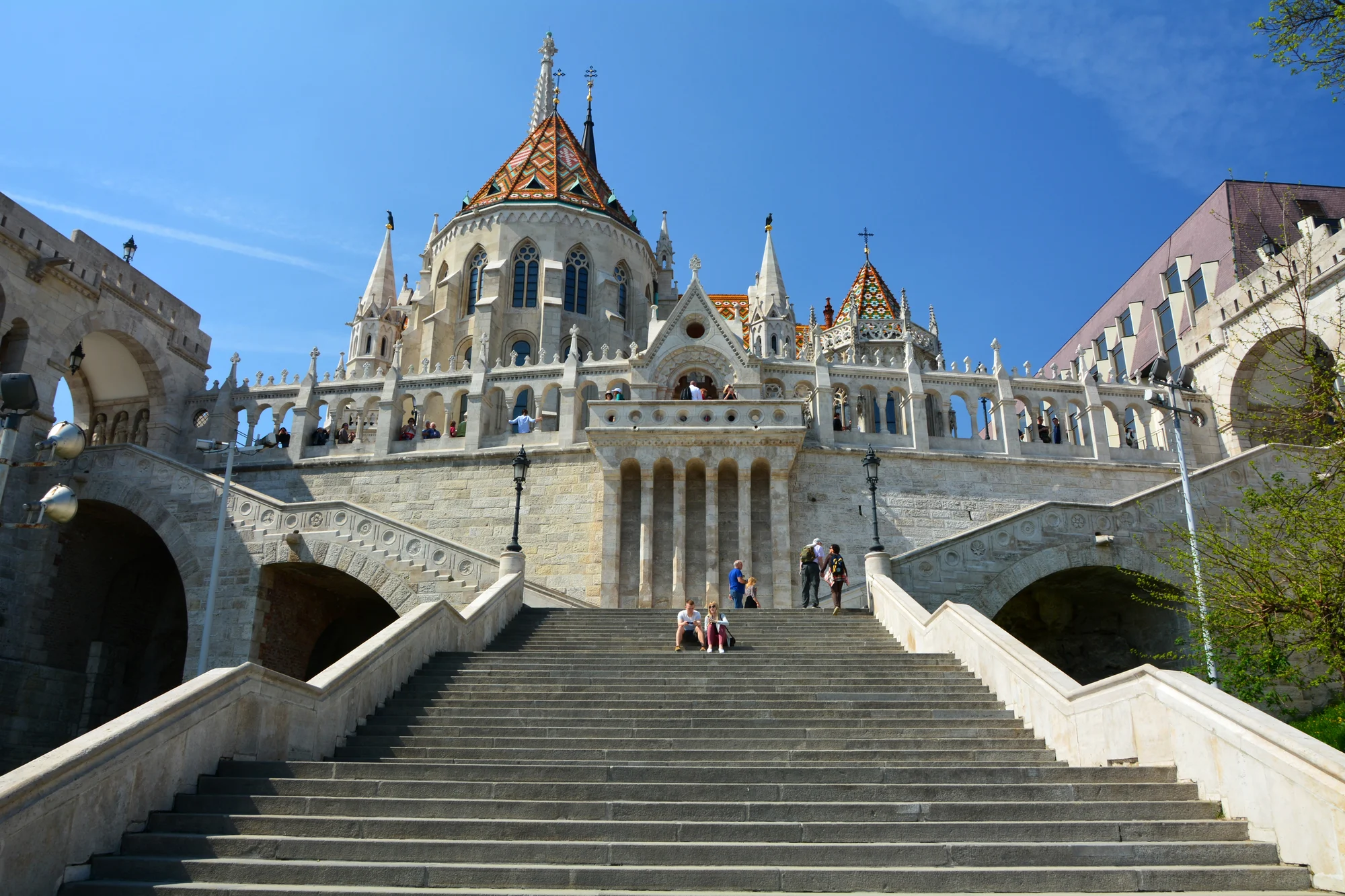
The palace complex becomes manageable when you decide which of four priorities matters most: an interior collection, a historic room or guided experience, outdoor architecture and views, or a broader Castle Hill route that happens to include the palace. Do not choose all four by default. A museum visit can absorb an afternoon; terraces and courts reward slow looking; a guided walk has its own time and meeting conditions; the civil town and Fisherman’s Bastion lie beyond the palace area and may deserve another day or a deliberate continuation.
If the Hungarian National Gallery or Budapest History Museum is central to your visit, use its own current visitor information for tickets, exhibits, access and day-of conditions. The palace-district map can help you understand where the institution sits within the larger complex. If no interior is essential, choose a short outdoor route with a clear beginning, a view, a pause and a descent. This avoids the false choice between an expensive, hurried museum day and an aimless exterior circuit. The palace can be a cultural destination or a city-scale walk; it does not need to be both in the same few hours.
Sources: buda-castle-district, budapestinfo-attractions, bkk-go
03
Pick an approach that belongs to the day
There is no universally best way to reach Buda Castle. A funicular, bus, walk from the riverside, Castle Garden Bazaar route or hilltop arrival from another Castle District stop each creates a different day. The right approach is the one that connects naturally to where you start, how much incline you can enjoy, whether you have a timed ticket and how you want to leave. Selecting it in advance turns the hill from an obstacle into a first chapter of the visit.
Use BKK for the current practical connection and the palace district’s visitor map for local routing. Allow for a short map distance to take longer because of slopes, steps, surfaces, crowds, weather or the simple urge to stop at a view. Do not commit a museum entrance for the minute after a steep ascent. Conversely, do not take a long scenic route uphill when a companion needs the energy for the collection or historic interior itself. A good approach protects attention for the palace rather than spending it before you arrive.
Sources: bkk-go, buda-castle-district, bkk-accessibility
04
Let the courts and terraces do real work
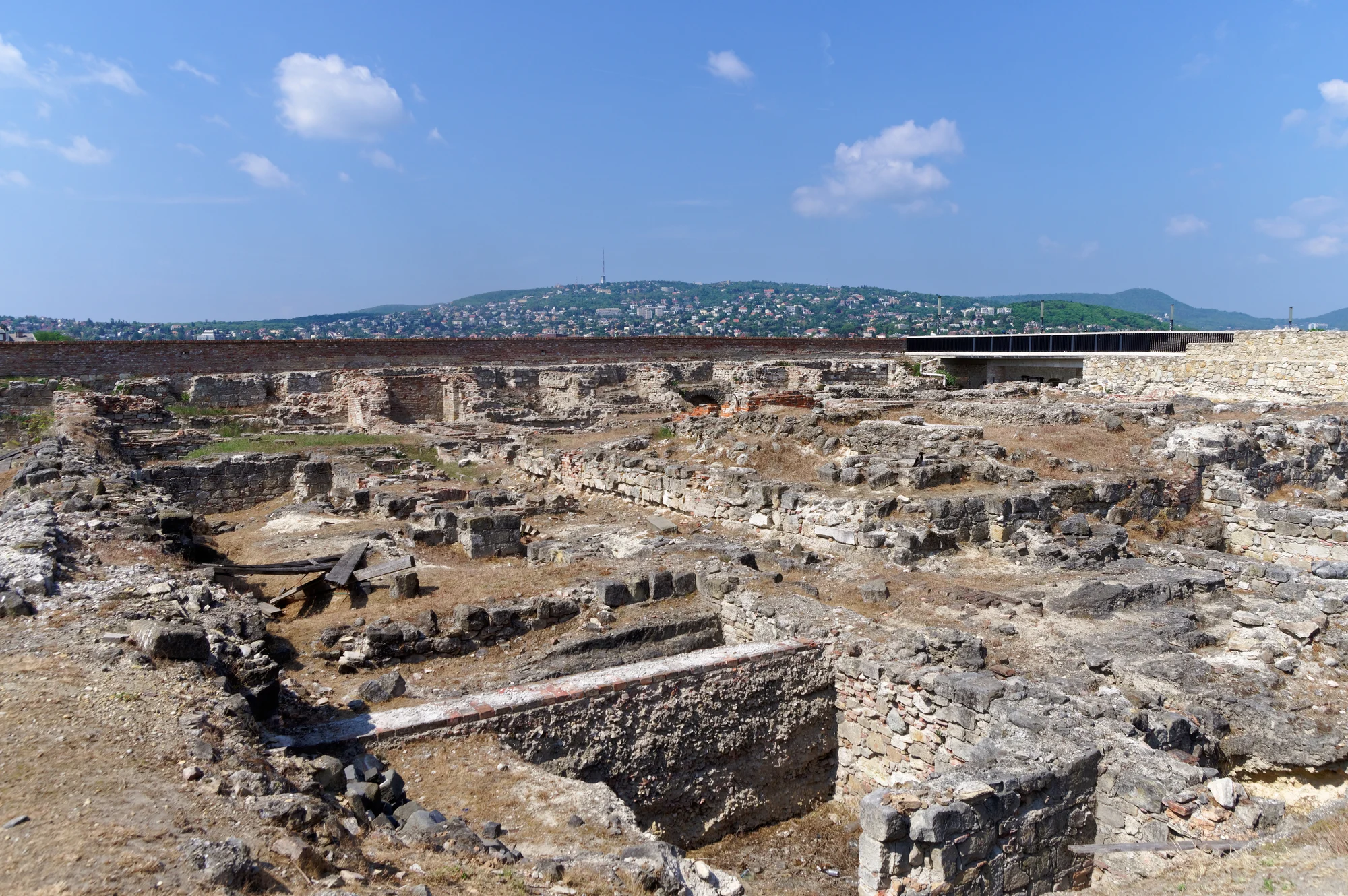
Buda Castle’s outdoor spaces are not merely corridors between museums. Courtyards, gates, fountains, ramps, terraces and changing views show how the complex relates to the Danube, Pest and the rest of Castle Hill. Give the route enough breathing room to notice the shift from enclosed court to open panorama, and from formal palace façade to the wider city. One strong terrace view can be more memorable than attempting every marked overlook while watching the clock.
Plan an outdoor interval before or after an interior, not only at the moment you are tired of queues. A museum can give the architectural setting an internal story; the terrace can give the collection a city-scale context. The palace district’s current map is preferable to a decades-old route sketch because access through courts, gardens and redevelopment areas can change. If a preferred terrace or passage is unavailable, choose the nearby alternate rather than crossing the entire hill to reproduce the original line. The value lies in the palace-and-river relationship, not one exact staircase.
Sources: buda-castle-district, unesco-budapest, national-hauszmann-program
05
Use the museum decision honestly
The National Gallery and Budapest History Museum represent different reasons to spend time in the palace. The useful question is not which is ‘the one to do’ but whether Hungarian art, the history of Budapest, a particular exhibition or a palace setting is the memory you want from the day. Read the museum’s own current programme before buying. If neither collection is a real priority, the outdoor complex may offer a better experience than an admission purchased simply because it is nearby.
Once you choose an interior, reduce the rest of the plan. Give the museum a start and finish with no competing ticket on the opposite bank of the Danube. Pair it with one terrace, a short hilltop or river route, a meal and a simple return. For children or travellers with limited stamina, one meaningful set of rooms plus outdoor air can be more engaging than an attempt to cover an entire collection. A palace museum is strongest when it is the day’s intellectual anchor rather than a time-boxed detour between views.
Sources: buda-castle-district, budapestinfo-attractions, bkk-go
06
Read reconstruction as current context, not a promised route
The palace district is shaped by restoration and reconstruction, including work described by the National Hauszmann Programme. That context can help explain why a route, façade, court or building feels newly restored, fenced, changed or actively interpreted. It should not become a promise that every proposed future feature will be available on your travel date. Development schedules, site conditions and public access can change, particularly around a large historic complex.
For visitors, the practical lesson is simple: check current palace-district information shortly before travel and plan a route with more than one worthwhile outdoor element. If an area is inaccessible, the day can still work through a museum, another court, a terrace, a guided walk, Castle Garden Bazaar or a different descent. Avoid turning works into a disappointment by making one construction-sensitive feature the only reason to go. The Palace has enough visible layers that a flexible plan remains rewarding even when a preferred passage is temporarily unavailable.
Sources: national-hauszmann-program, buda-castle-district, bkk-go
07
Use a step-free plan when it matters
A hilltop palace route can be visually tempting and physically uneven at the same time. The official palace map identifies a step-free route through Castle Garden Bazaar and the South Gardens, while BKK publishes route-specific accessibility information for public transport. Those sources are much more useful than assuming an elegant-looking promenade is level, that a historic entrance has the same access as a museum entrance, or that a lift shown in an old review remains available.
Build the route from the access need outward. Confirm the transport connection, the exact palace-district entrance or route, the museum’s venue conditions, the distance between rest points and a simple return. Contact the operator when a detail is essential. It may be better to choose one museum and one accessible exterior perspective than to chase the entire hill. That is not seeing less; it is choosing a route where the architecture, views and collection can be experienced without an exhausting or risky final stretch.
Sources: buda-castle-district, bkk-accessibility, bkk-go
08
Decide whether the palace needs a half day or a full day
A half-day Buda Castle route works when the priority is one museum, one guided experience, or a compact outdoor sequence with a clear approach and descent. Start from the side of the hill that suits your arrival, keep one court or terrace as the visual centre, take the interior at an unhurried pace and finish near the river or with a direct return. This is usually the better choice on a short first trip, on arrival day, in demanding weather or when the group has another meaningful plan later.
A full day makes sense when the palace complex is the reason for being in Buda, when an exhibition or history interest needs time, or when you want to connect the complex to a broader Castle District route without treating every point as a race. Even then, schedule a meal and a rest interval. Do not add a second distant attraction merely because the morning felt efficient. A longer palace day should create more room for a museum, garden, viewpoint or conversation—not more transfers. Check live district and museum information as you decide the scale, because a closure or special programme may make the shorter or longer version the sensible option.
Sources: buda-castle-district, budapestinfo-attractions, bkk-go
09
Pair Buda Castle with the right neighbour
Buda Castle pairs naturally with a short lower-Buda riverside route, Castle Garden Bazaar, a selected Castle District street sequence, a Buda-side meal, or a simple bridge or tram connection when the energy remains. It does not automatically need Fisherman’s Bastion, Matthias Church, the Labyrinth, Gellért Hill and a central-Pest evening on the same day. Those may all be good experiences, but their accumulation makes the palace disappear inside a transfer plan.
Let the chosen priority decide the companion. Art and history visitors may keep the whole day on the hill and nearby riverside. Architecture lovers may make the palace, terraces and gardens one continuous route. First-time visitors might combine the exterior with a short river crossing for a contrast view, then save the civil town for tomorrow. Families may prefer one museum or outdoor court plus a food pause and the simplest route down. The best companion is the one that reinforces the day’s pace rather than proving how many names fit on a map.
Sources: budapestinfo-attractions, budapestinfo-city-walks, bkk-go
10
Choose the descent before you get tired
A Castle Hill route often fails at the ending. Visitors use all their energy climbing, staying in the museum longer than expected or taking photographs on the terraces, then face an unplanned descent in rain, darkness or a crowded period. Decide before you arrive whether you will walk down to the river, use a public-transport connection, take a particular accessible route or continue across the hill. The descent is part of the visit, not the inconvenient gap after it.
A deliberate descent can be one of the best visual moments of the day, especially when it returns you to the Danube and lets the scale of the palace recede behind you. But it must fit conditions. Use live BKK information if public transport is your plan; use the palace map if a local route or lift matters; shorten the final walk if weather or energy has changed. The right finish protects the enjoyment of the castle rather than making the last kilometre the story everyone remembers.
Sources: bkk-go, buda-castle-district, hungaromet-climate
11
Let weather change the sequence, not the whole day
Clear conditions can make the palace terraces, gardens and river views a natural first or last-light priority. Heat can make exposed courts harder at midday, while rain, wind, snow or early darkness can make an interior and a shorter outdoor loop more sensible. The hill is especially sensitive to weather because surfaces, slopes and visibility all change the experience. Use climate information as background, then check the forecast close to travel and let it decide whether the outside part comes before or after the museum.
Keep a modest indoor and outdoor version of the same day. The outdoor version might be an approach, one terrace, one court, a meal and a descent. The indoor version might be one museum or historic interior, a brief covered or nearby exterior moment and a direct return. Avoid responding to rain by adding museums across the city; that replaces weather frustration with transport frustration. A coherent smaller Buda Castle day is still a genuine experience of the complex.
Sources: hungaromet-climate, buda-castle-district, bkk-go
12
Plan photography without letting it run the route
Buda Castle offers views at several scales: palace details, courts, a terrace toward the Danube, the Buda hillside and the Pest skyline. Choose one or two that belong to the path you are already taking. Do not assume every terrace is public, uncrowded or open at the time you want. Check current access, respect any barriers and keep clear of entrances and circulation routes. The best images usually come from having enough time to look, not from forcing a sequence of locations that appear in a social-media list.
Photographers can use the day’s light to choose the route order, but companions should still have a purpose beyond waiting at an overlook. Pair a view with a historic court, garden, museum or meal so a pause has value for everyone. If cloud, crowds or construction remove a planned composition, accept the alternative perspective. The palace is not a fixed postcard; it is a complex city landmark whose mood changes with weather, people and the angle from which you approach it.
Sources: buda-castle-district, unesco-budapest, hungaromet-climate
13
Use the Buda Castle day-of check
Before leaving, answer six questions: What is our one palace priority? Which approach fits the day? Is a museum or guided experience confirmed through its operator? Which court or terrace completes the route? How will we descend or return? What nearby alternative replaces a closed or difficult section? Those answers are enough to make a large complex legible. If the route still requires several long climbs, two museums and a distant evening reservation, reduce it until the palace has room to be the actual point.
On the day, use the Buda Castle Palace District source for current local conditions, BKK for the live connection and the individual museum or tour operator for its own requirements. Keep your attention on the sequence rather than a tally of gates. A calm approach, one chosen interior or outdoor focus, a terrace view, a pause and a considered descent will show more of Buda Castle than an exhaustive circuit made at running speed.
Sources: buda-castle-district, national-hauszmann-program, bkk-go
Evidence, not footnotes in the dark
Sources
- Buda Castle Palace District official informationBudavári Palotanegyed · checked 9 July 2026
- National Hauszmann ProgrammeNational Hauszmann Programme · checked 9 July 2026
- Budapest World Heritage listingUNESCO World Heritage Centre · checked 9 July 2026
- BudapestGOBKK · checked 9 July 2026
- BKK accessible transportBKK · checked 9 July 2026
- Budapest city walksBudapest Info · checked 9 July 2026
- Budapest attractionsBudapest Info · checked 9 July 2026
- Budavár District I municipalityBudavár Municipality · checked 9 July 2026
- Budapest climate data seriesHungaroMet · checked 9 July 2026