Food & Drink · guide
Budapest Food Markets Guide
Choose Budapest food markets for shopping, a snack, architecture or neighbourhood context with current operator checks, realistic carrying plans and a clear route onward.

The short version
What matters
- Choose the market by purpose—ingredients, a small food stop, a building visit or local shopping—not a generic ‘best market’ label.
- Check the relevant market operator for current opening, vendor, holiday and visitor conditions before travelling.
- Buy only what fits the next activity, weather and transport route; a market purchase should not become the day’s luggage.
01
Choose a market purpose before choosing a market
Budapest markets can solve different problems: buying ingredients, finding a small snack, understanding a working food hall, taking in a building, or giving a neighbourhood route a practical pause. Those are not interchangeable. Start by naming one purpose and the time available. A visitor who wants a riverside landmark-and-food stop may make a sensible Central Market Hall plan; someone who wants only breakfast may be better served by a nearby bakery or café instead of crossing the city for a hall.
This is how to avoid treating every market as a required attraction. A market works best when it supports the day already taking shape. Choose it because it fits a District IX walk, the end of a museum visit, an ingredient purchase for accommodation or a short food-oriented interval. Do not expect one building or one stall to explain all Hungarian food. A modest, deliberate visit usually gives more texture than an anxious attempt to sample, photograph and buy everything.
- Pick one market purpose before opening a map.
- Give the market a time limit that works with the next booking.
- Use a café or restaurant when a seated meal is the actual priority.
- Let the market complement, not replace, later food choices.
Sources: central-market-hall, budapestinfo-gastronomy, bkk-go
02
Understand what a working market is—and is not
A market hall is a place where people shop, sell and move through their day, not a static food exhibition. Crowds, queues, seasonal produce, vendor availability and practical routines are part of the experience. Budapest Market Halls’ official information is the right place to check current conditions for the Central Market Hall, while a specific seller’s offer remains their own. Arrive ready to observe, decide and move on politely rather than expecting every counter to behave like a visitor centre.
That distinction makes the visit more enjoyable. A good market route notices the building and the working rhythm, buys or tastes one thing that genuinely fits the day, then leaves space for the surrounding streets. Do not block a counter while a group debates every option, crowd a queue for photographs, or assume a seller must provide a long explanation in English. Courtesy is practical: look first, make a clear order, keep aisles open and let people working there set the pace.
- Treat the hall as a shared working space.
- Check current operator conditions before travelling.
- Look before ordering; then make a clear, simple choice.
- Keep vendor counters and aisles clear for regular shoppers.
Sources: central-market-hall
03
Use Central Market Hall for its specific strengths
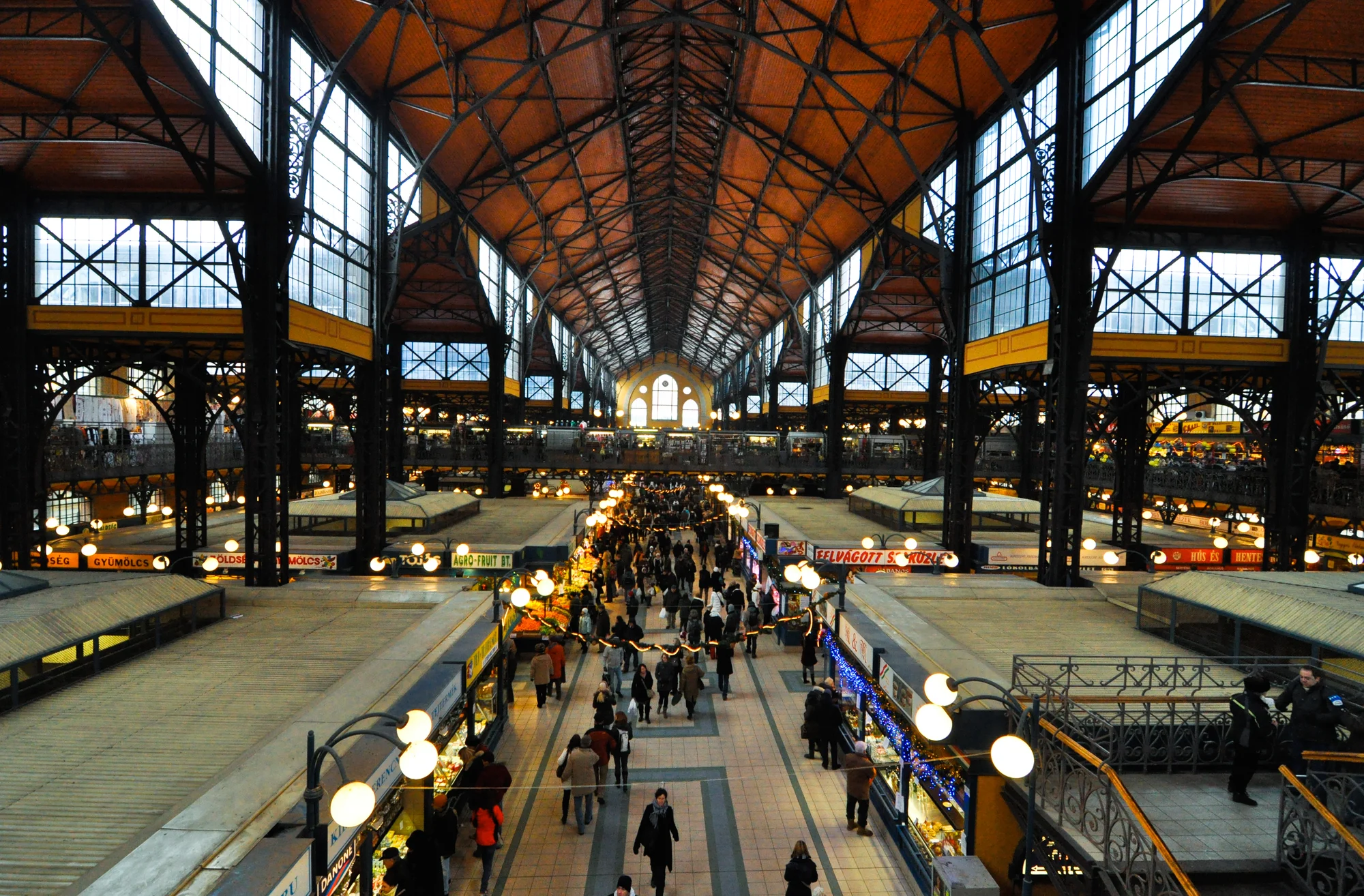
Central Market Hall is a useful choice when its Fővám Square setting, building, shopping purpose or District IX edge genuinely fits the itinerary. Its operator publishes current visitor information, and the hall can connect naturally to a Danube segment, Ferencváros, a nearby cultural stop or a direct transit return. It is less useful when the group needs a quiet brunch, an all-day cooking class, a guaranteed vendor or a cross-city detour merely because an older list called it essential.
Plan the hall as one anchor. Decide whether you are looking for an interior and short browse, ingredients, a modest food stop or one gift. Check current opening details, choose the entrance and exit that support the next move, and keep purchases small if the day includes walking or transit. The building can be memorable without becoming a food marathon. A market visit becomes more honest when the local route outside is allowed to matter too.
- Use the official hall page for live opening and visitor information.
- Pair the hall with District IX or a nearby river continuation.
- Choose one floor or shopping task rather than circling repeatedly.
- Keep an indoor or direct-return fallback for poor weather.
Sources: central-market-hall, district-ix-municipality, bkk-go
04
Choose food at the scale the day supports
Market food can be a small taste, a practical lunch or a purchase for later; it does not need to become every meal at once. Before ordering, ask whether you are hungry now, carrying bags, meeting a timed ticket, or planning a later restaurant. A rich snack may be perfect before a short riverside walk and unhelpful before a long museum visit or a booked dinner. Let appetite, seating, queue tolerance and the next hour decide the scale.
Read current vendor information where available, but do not expect fixed offerings from old posts. If a counter is too busy, unsuitable for a dietary requirement or simply not appealing, choose another simple option or leave the hall. The goal is not to prove expertise by eating a particular food. A market stop succeeds if it gives the group nourishment or curiosity without forcing a decision that makes the rest of the route uncomfortable.
- Choose snack, lunch or shopping—not all three by obligation.
- Use a restaurant later when the group needs a comfortable seated meal.
- Ask directly about an ingredient when it matters to the order.
- Avoid planning a heavy market meal immediately before another food booking.
Sources: central-market-hall, budapestinfo-gastronomy
05
Plan purchases for the next two hours
The most useful market question is not ‘what can I buy?’ but ‘what can I carry, store and use before the next stop?’ Perishable food, glass, wet umbrellas, souvenirs and bulky bags change a route quickly. If the day continues through museums, churches, hills, baths or multiple transfers, choose a small purchase that can stay secure. If you are returning to accommodation soon, ingredients or a larger food purchase may make more sense. Buy for the itinerary you actually have.
Keep shopping practical. Bring a compact bag only if it will help, protect fragile food, and do not assume every later venue has storage. A market purchase should not force the group to skip a planned walk or rush a gallery because someone is carrying something awkward. When in doubt, make a smaller choice, take a photograph of a product that interests you, and leave the more ambitious shopping for a day built around accommodation or a simpler return.
- Buy perishables near the end of a route when possible.
- Keep bags small enough for the next train, tram or museum.
- Do not rely on a later venue to store market purchases.
- Choose a photo or note over an impractical souvenir.
Sources: central-market-hall, bkk-go
06
Pair market routes with the right neighbourhood
Markets make most sense when they belong to a local-scale route. Central Market Hall can lead toward Ferencváros or a river interval; a central market-area visit can fit District V; a neighbourhood food stop can support a District VII walk rather than compete with it. The point is not to nominate one district as the best food area. It is to avoid sending a hungry group back and forth across Budapest for unrelated pins on a map.
Build one sequence: market, one nearby activity, a realistic pause and the next transport choice. If the weather is poor, keep the continuation indoor or direct. If the day is light, a market can be a start rather than the whole programme. Use BudapestGO close to departure for live routing, especially after a hall visit where bags, crowds and a changed appetite can make the original plan less attractive.
- Use District IX for a market-and-river or museum-scale route.
- Keep central-Pest market stops near central-Pest commitments.
- Avoid a cross-city transfer for every food course.
- Use live routing after the visit rather than assuming the same return route.
Sources: district-ix-municipality, district-v-municipality, district-vii-municipality, bkk-go
07
Make markets work for families and mixed groups
A market can be vivid for children and groups, but it works best with a narrow job: choose one snack, find one ingredient, look at the building or take a short route through the hall. Set a meeting point before separating, keep children close in busy aisles and avoid expecting everyone to browse at the same pace. One person may enjoy ingredients while another only wants a quick bite; that difference is normal and should shape the length of the visit.
For access needs, check both the market operator and the full BKK route. Entrance, floor, lift, toilet, surface and crowd conditions matter as much as the address. A pushchair, mobility aid, luggage or fatigue can make a crowded market less suitable at a particular time. The group does not have to force the visit because it appears on an itinerary. A short exterior look, nearby café or different food stop can be the right choice today.
- Give each group visit one clear shared purpose.
- Name a meeting point before anyone browses separately.
- Check the whole route, not just the market address, for access needs.
- Normalize a shorter or alternative visit when the hall is too crowded.
Sources: central-market-hall, bkk-accessibility, bkk-go
08
Use weather and timing as real constraints
A market hall is useful shelter in rain, heat or cold, but it is not automatically an all-day weather plan. Check the current forecast and decide whether the hall is a short indoor bridge, the start of a museum-and-café route or a quick stop before returning to accommodation. In clear weather, it may lead naturally to a short river walk; in difficult conditions, it may be better to keep the next move indoors and geographically close.
Timing matters too. Opening patterns, public holidays, morning shopping rhythms, lunch queues and closing periods are live operator questions. Check before setting out, arrive with a fallback, and do not ask staff to solve a plan built on outdated information. The reliable market itinerary combines current operator conditions with a realistic weather response, not a fixed list of things that supposedly work every day.
- Check operator hours and the immediate forecast on the day.
- Use the hall as a bridge between nearby indoor plans in bad weather.
- Keep a café, museum or direct return as a timing fallback.
- Do not build a long route around an unverified holiday opening.
Sources: central-market-hall, bkk-go
09
Use market etiquette to make the visit better
The easiest market etiquette is practical: do not obstruct aisles, keep the group compact, look before photographing people or products closely, and follow vendor or building instructions. If you are unsure whether something can be sampled, photographed or carried into another area, ask briefly. Respect is not ceremonial; it is how a hall remains usable for shoppers, workers and visitors at the same time.
The same applies to money and pace. Read a price or ask before ordering rather than creating a dispute after food is prepared. Keep belongings secure, do not leave bags on counters or walkways, and move out of the ordering area after paying. These small habits make the market feel less like a crowded attraction and more like an intelligible part of city life. You will have more room to notice the food and architecture when you are not creating friction around them.
- Keep aisles, counters and exits open.
- Ask before close-up photography of people or working stalls.
- Confirm the order and price before a vendor prepares it.
- Move away from the counter after paying so the next shopper can use it.
Sources: central-market-hall
10
Finish with a simple exit plan
Before the group leaves the hall, decide where purchases are going, whether anyone needs a toilet or rest point, which exit supports the next route, and how you will handle a changed plan. The market is not finished when a purchase is made. A clear exit protects food, reduces crowd stress and prevents the common problem of standing outside with bags while everyone searches for a new destination.
Use BudapestGO for the live return or continuation, particularly if weather, queues or the amount carried has changed the day. If the original plan no longer fits, preserve the purpose: a river walk can become a short nearby pause, a museum can become a different local indoor stop, or a long route can become accommodation. The guide’s best market day is not the busiest one—it is the one that leaves the group fed, interested and able to continue.
- Choose the next destination before exiting with bags.
- Check the live route after shopping, not only before arriving.
- Keep purchases compatible with the next transport and activity.
- Change the plan early when weather, crowding or energy makes it sensible.
Sources: bkk-go, central-market-hall
Evidence, not footnotes in the dark
Sources
- Central Market Hall official informationBudapest Market Halls Ltd. · checked 9 July 2026
- Budapest gastronomyBudapest Info · checked 9 July 2026
- Belváros-Lipótváros District V municipalityBelváros-Lipótváros Municipality · checked 9 July 2026
- Erzsébetváros District VII municipalityErzsébetváros Municipality · checked 9 July 2026
- Ferencváros District IX municipalityFerencváros Municipality · checked 9 July 2026
- BudapestGOBKK · checked 9 July 2026
- BKK accessible transportBKK · checked 9 July 2026