
Market hall
Great Market Hall
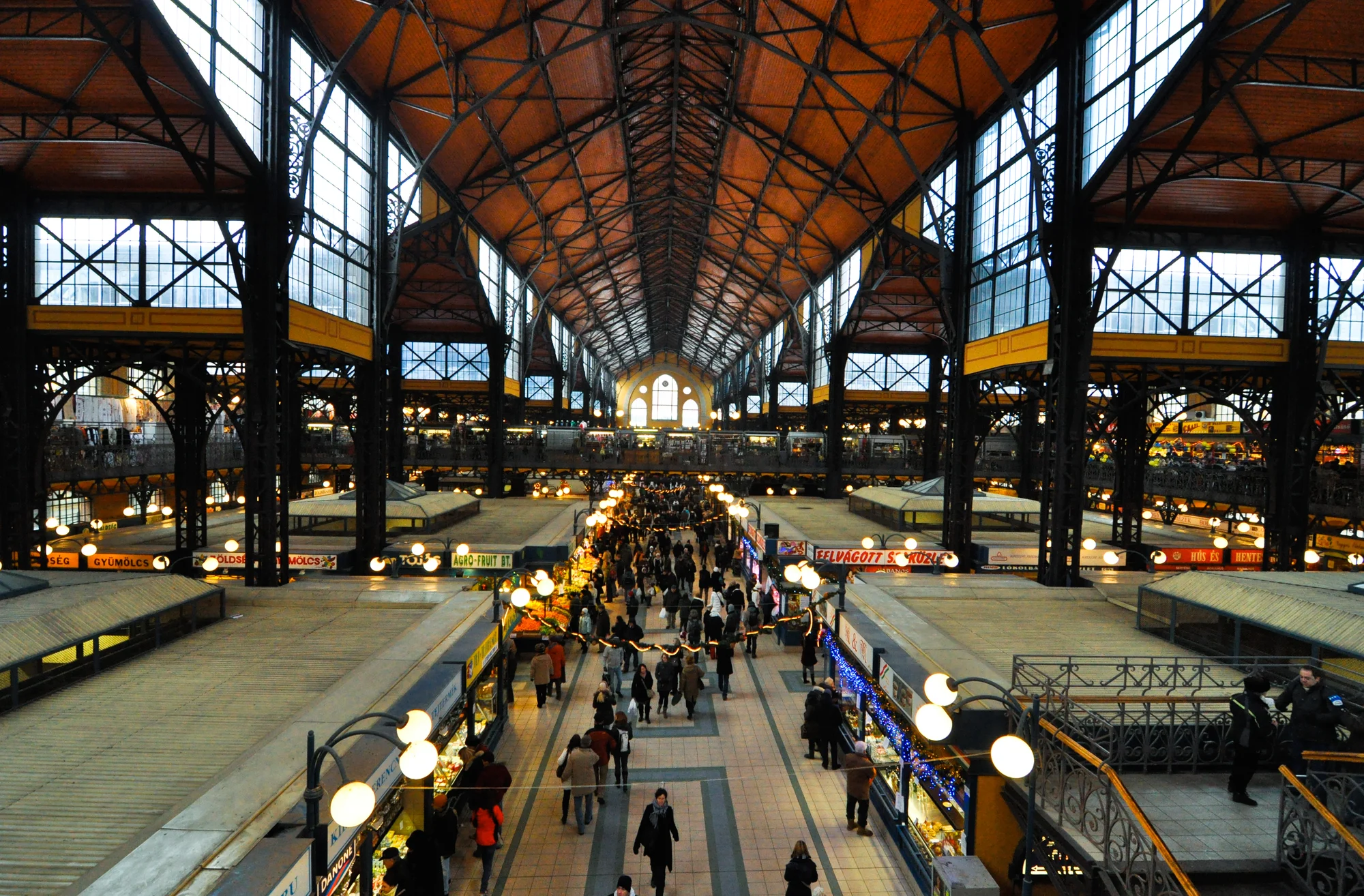
A working market for food shopping, a modest meal, architecture and a south-Pest route connection.
- Location
- Fővám tér, District IX
- Checked
- 9 July 2026
Things to Do · landmark
Visit Budapest’s Great Market Hall with realistic shopping and eating expectations: check current operator information, choose a floor and purpose, then connect the hall to a manageable District IX or river route.
Places, with bearings
Use the map for orientation, then use the linked guide and official sources for the decision that matters.
Mapped places
A working market hall where opening conditions, shopping, food and the route through District IX are distinct choices.
Open in OpenStreetMap ↗Map data © OpenStreetMap contributors · Tiles © OpenFreeMap
Place facts, kept current
Use the official operator for live tickets, hours and access; this card keeps the stable planning context visible.
Market hall
A working market for food shopping, a modest meal, architecture and a south-Pest route connection.
The short version
01
The Great Market Hall can be a working-market visit, a food-shopping stop, a quick lunch decision, a building-and-river route, or part of a Ferencváros day. Choose one reason before arriving. The hall’s scale and reputation make it easy to expect a complete explanation of Hungarian food in one pass; a better visit focuses on what you actually want to buy, taste or see, then leaves room for the street and river context outside.
Use the market operator’s current information for opening, vendor and visitor conditions. Do not arrive with a rigid food list based on an old social-media video or expect every stall to provide the same experience. A market is shaped by the time of day, season, sellers and crowd level. The practical route is one floor or purpose, one short food or shopping choice, and a nearby continuation.
Sources: central-market-hall, budapestinfo-attractions
02
Give the building a few minutes of orientation before following a queue or a smell. Decide whether you need fresh produce, a gift, a small food stop, a general look at the interior or simply a route through to the neighbourhood. This prevents the common market problem of circling repeatedly, buying too much to carry and leaving without knowing what you wanted from the visit. A short, deliberate loop is more useful than trying to inspect every counter.
If you are buying food to take away, consider the next hours of the itinerary. A perishable purchase is not useful if you are about to take a long hill walk, visit a museum with entry rules, or travel far from accommodation. Shop for what fits the day: a small snack, a modest gift, ingredients for a nearby kitchen, or an experience that ends with lunch. The market should support the route rather than becoming luggage.
Sources: central-market-hall, bkk-go
03
A popular market is not automatically the best or cheapest place for every meal. Choose a food stop when it suits your appetite, budget, queue tolerance and the kind of market experience you want. Check current vendor information where available, look before ordering and be comfortable choosing one modest item rather than treating the visit as a challenge to sample everything. The aim is a useful meal or taste, not a performance of local expertise.
If the hall is crowded, keep the food choice simple and use the surrounding district for the next pause. A market lunch can work well before a south-Pest or river route; a market snack may be enough before a museum, walk or later dinner. Do not turn the day into a sequence of food stops merely because the map labels them as famous. One satisfying market decision leaves attention for the neighbourhood and the rest of Budapest.
Sources: central-market-hall, district-ix-municipality, bkk-go
04
The market sits at a useful edge for a Danube, central-Pest or Ferencváros route. Choose one continuation: a riverside segment, a nearby museum or cultural stop, a District IX street route, a bridge crossing or a straightforward return. Do not add the Castle District, City Park and a distant evening area simply because the hall feels central. The strongest pairing uses the market as a beginning or pause inside one local-scale day.
Weather and energy should decide the scale. In rain, a market-and-museum or market-and-café route may work better than a long embankment walk. In clear weather, the hall can lead toward the river with one short outdoor interval. Use BKK for the live connection and the relevant venue operator for a ticketed continuation. A clear next step turns a crowded market exit into a purposeful Budapest route.
Sources: district-ix-municipality, bkk-go, hungaromet-climate
05
Before leaving, ask: Is the hall open under its current operator conditions? Are we shopping, eating or looking at the building? What can we comfortably carry? Which one nearby continuation makes sense? What is the weather alternative? Which BKK route brings us there and home? These questions prevent the market from becoming an unplanned detour at the moment the group is hungry or tired.
On the day, respect the hall as a working public market. Keep aisles clear, avoid blocking a stall while deciding, follow vendor and building rules, and make a small choice with confidence. The Great Market Hall works best when it gives a Budapest day texture—food, architecture and ordinary commerce—without asking the visitor to turn one indoor stop into the entire itinerary.
Sources: central-market-hall, bkk-go, bkk-accessibility
06
On a first visit, the market can be a vivid introduction to food shopping and everyday Budapest, but it does not need to carry the whole city’s food identity. Give it a clear role: a morning food stop before the river, a practical lunch decision, a short architectural interior, or a place to buy one small item for later. That scale leaves room for a separate meal neighbourhood, a museum or a bath day elsewhere in the stay.
The temptation is to combine the hall with every food recommendation in the city. Resist it. Choose one purchase or taste, one nearby continuation and one return plan. If the market feels busy, loud or overwhelming, shorten the route. The visit has still succeeded if you understand its scale, see the working stalls and leave with enough energy for the street, river or cultural stop that follows.
Sources: central-market-hall, budapestinfo-attractions, bkk-go
07
With children or a mixed group, decide in advance whether the hall is a snack stop, a short building visit or a shopping task. Keep the group close in crowded aisles, set a meeting point and avoid expecting everyone to browse at the same speed. A family may prefer one visible food choice and a quick exit to the river or a park; a group of adults may split briefly for a purchase and reconnect at a known entrance or nearby café.
For access needs, check the market operator and BKK route information rather than assuming every entrance, floor or aisle works the same way. Carrying bags, a pushchair, wet umbrellas or luggage can change the visit dramatically. The right market route is the one that lets the people on the trip move comfortably, choose something they genuinely want and leave without turning a food stop into an endurance test.
Sources: central-market-hall, bkk-accessibility, bkk-go
08
The indoor market can be useful on a wet, cold or very hot day, but it is not a complete weather plan by itself. If rain continues, pair it with one nearby indoor stop, a café or a direct return. If conditions improve, take the river or Ferencváros continuation after the visit. Check the forecast close to travel and decide whether the market should be the shelter between outdoor moments or the main indoor anchor for that part of the day.
Do not respond to bad weather by adding multiple distant indoor attractions. The hall works best when it keeps the route geographically honest. A small purchase, one food pause and a nearby museum or transport connection can form a satisfying rain plan; a clear interval can instead lead to the embankment or a bridge. Let the conditions determine the order without pretending the market itself has to fill every hour.
Sources: hungaromet-climate, bkk-go, district-ix-municipality
09
The market visit is not finished when you pay. Decide where the bags go, what can be eaten immediately, whether you need a nearby bin, toilet or rest point, and which door or street leads to the next route. A rushed exit through a crowd with fragile food or an oversized souvenir can undo the calm choice you made inside. Keep the purchase modest if the rest of the day is on foot or uses several transfers.
If you are heading to accommodation, use the live BKK route before buying something that will be difficult to carry. If you are continuing along the river or through District IX, choose a purchase that fits in a small bag and does not demand an immediate meal. Leaving the hall with a clear next movement makes the market feel like part of the city’s everyday rhythm rather than a detached tourist errand.
Sources: bkk-go, central-market-hall, district-ix-municipality
10
Before setting out, confirm the operator’s current conditions, decide the one reason for visiting, identify one thing worth buying or tasting, choose the nearby continuation and know the route home. Add the forecast and carrying load to that check. Those small decisions keep expectations honest and help the group arrive ready to use the hall rather than debate every choice under pressure.
On the day, let curiosity remain within the route. Notice the building, the food, the pace of commerce and the different reasons people are there. If the market no longer suits the plan, shorten the visit and move to the nearby river, a café, a museum or transport. The right market experience is the one that leaves you fed, interested and able to continue Budapest at the scale the day permits.
Sources: central-market-hall, bkk-go, hungaromet-climate
11
A market visit can be a useful introduction to ingredients and everyday food shopping, but it is not a complete substitute for a meal in the neighbourhood or the kind of restaurant experience you actually want. If food is a main trip interest, give the market one clear role and let a later lunch or dinner happen at the pace and budget that suit the group. This avoids the disappointment of asking a crowded indoor hall to deliver every kind of Budapest food memory at once.
The same principle helps with budget and appetite. A small snack, a practical purchase and a pause may be exactly right before the river or museum. A full meal may be better saved for a place where you can sit comfortably, talk and choose without carrying bags. The market has worked when it adds texture to the day’s food story, not when it makes every later meal feel unnecessary or rushed. Leave enough room to notice the food, the building and the neighbourhood around both, calmly, before moving onwards to the next street.
Sources: central-market-hall, district-ix-municipality, bkk-go
Evidence, not footnotes in the dark