Things to Do · landmark
Széchenyi Chain Bridge Guide
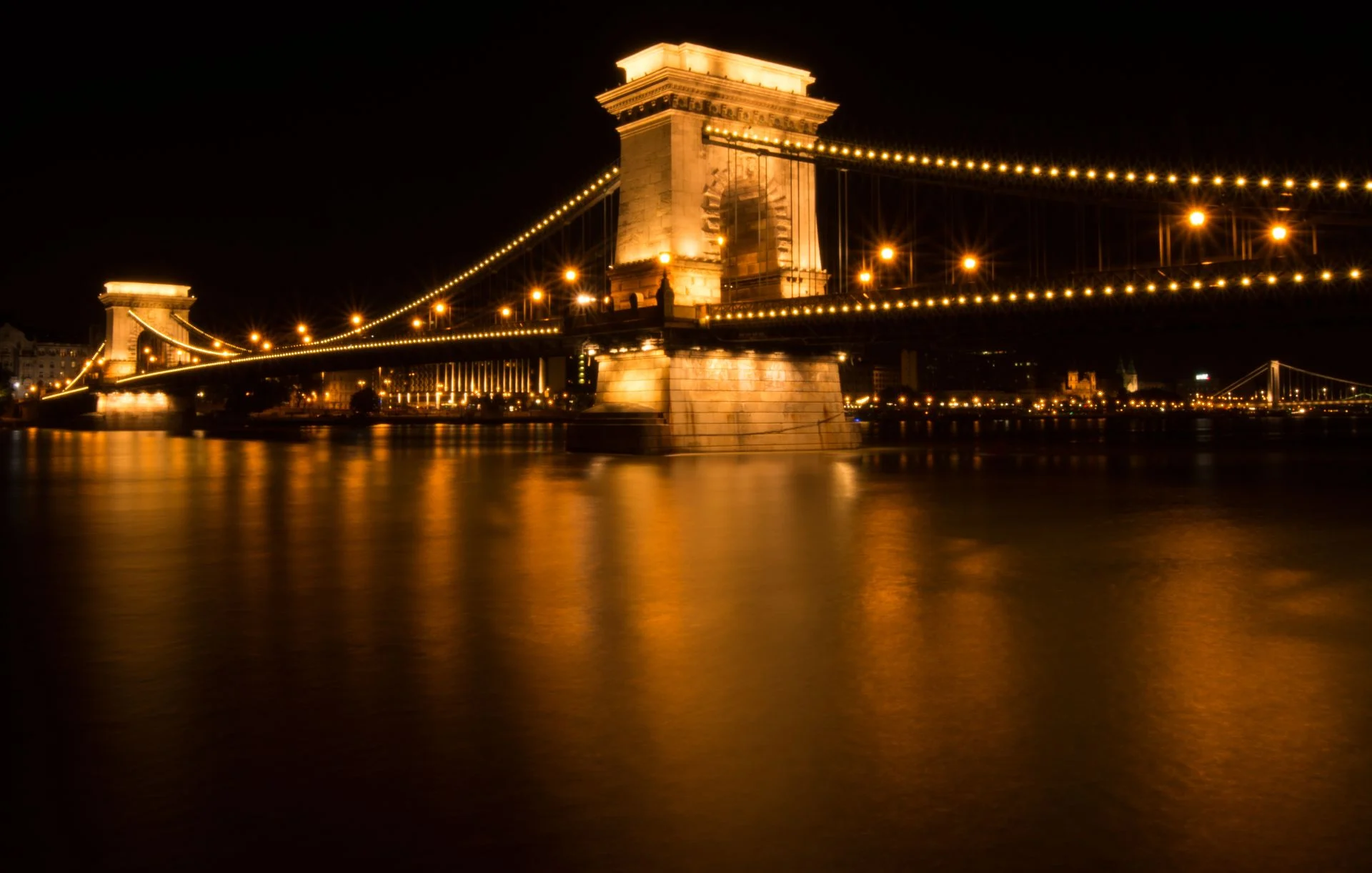
Walk the Chain Bridge as a deliberate Buda–Pest crossing: choose a direction, check live conditions, understand its reconstruction context and connect it to one coherent river route.

Places, with bearings
Keep the city in view
Use the map for orientation, then use the linked guide and official sources for the decision that matters.
Mapped places
- Széchenyi Chain Bridge
A central Danube crossing whose pedestrian, traffic and approach conditions should be checked before making it the spine of a walk.
Open in OpenStreetMap ↗
Map data © OpenStreetMap contributors · Tiles © OpenFreeMap
The short version
What matters
- Use the bridge to connect one Buda or Pest route, not as a rushed detour between distant sights.
- Check BKK and official city information for current access and transport conditions.
- Choose a crossing direction by what you want to see before and after it.
01
Treat the bridge as a route, not a photograph
The Chain Bridge is most useful when it joins two parts of a day that already belong together. A Pest-to-Buda crossing can lead from a riverfront or civic route toward Castle Hill; a Buda-to-Pest crossing can turn a hilltop descent into a central dinner, square or evening walk. Decide which shore begins the story and which shore ends it before you step onto the bridge. That turns a famous landmark into a transition with purpose rather than a back-and-forth interruption.
Give the crossing time. The views, pylons, lions, wind, crowds and changing river perspective are the experience. Do not plan it as a three-minute link immediately before a timed ticket. One bridge walk, one stop for the river view and one nearby continuation are enough. A second crossing should solve a real route problem, not repeat the same photograph because the day had no structure.
Sources: chain-bridge-official, unesco-budapest, bkk-go
02
Choose the direction by the day’s next chapter
From Pest toward Buda, the bridge can be the visual approach to Castle Hill, the funicular area or a Buda-side riverside route. From Buda toward Pest, it can be the satisfying conclusion to a hilltop walk, with the central city, Basilica area or an evening meal ahead. Neither direction is objectively better. Light, weather, walking load, the itinerary’s next anchor and the group’s energy matter more than a generic best-view claim.
If you are using the bridge after a museum, church or hill route, allow time to reset before the crossing. If you are using it before a timed entry, leave an even larger buffer. The bridge may look like a straight line on a map, but the approach to the correct shore, surrounding road crossings, crowd flow and final walk can take longer than expected. BKK’s live information is the right place for the practical connection around it.
Sources: bkk-go, chain-bridge-official, bkk-accessibility
03
Keep reconstruction context current
Budapest Info reports that the bridge’s structural and monumental reconstruction was completed in August 2023. That fact explains why visitors may find older closure and diversion advice online; it should not be used as a substitute for current conditions. BKK’s reconstruction information and live journey tools are better sources when a route, crossing rule, service or disruption affects your day. Never build a timed itinerary from a historic closure notice or a social-media claim.
The practical lesson is to separate permanent context from live access. The bridge’s importance in Budapest’s river landscape and its reconstruction story belong in the guide. The current way you walk, cycle, ride or connect across it belongs to the official operator on the day you travel. That keeps the route useful without making a stale promise about conditions that transport and city authorities can change.
Sources: chain-bridge-official, chain-bridge-reconstruction, bkk-go
04
Use weather and access honestly
A bridge is exposed. Heat, rain, wind, darkness, crowd density and a companion’s mobility or energy can change whether a crossing is pleasant. Check the forecast close to travel and retain a route that works without a long exposed walk. For access needs, use BKK’s route-specific information for the whole approach and return; do not infer a comfortable route from a bridge photograph. A short river view plus a practical transport move can be the right decision.
The weather alternative should stay geographically close. If the crossing becomes unsuitable, choose a riverside shelter, nearby interior, meal or direct return rather than adding a distant attraction to compensate. A complete Budapest day is not defined by crossing this particular bridge. It is defined by seeing how Buda, Pest and the Danube connect under the conditions you actually have.
Sources: hungaromet-climate, bkk-accessibility, bkk-go
05
Use the bridge on a first trip
For a first visit, the Chain Bridge can provide the clearest physical explanation of Buda, the Danube and Pest. Use it once in a day that already has a river line: begin with a central-Pest landmark and cross toward Buda, or end a Buda route by returning to Pest. Keep the rest of the day small enough that you can stop halfway, see the water in both directions and still arrive at the next place without checking the time every minute.
Do not make the bridge carry an impossible list. Parliament, the Basilica, Castle Hill, Fisherman’s Bastion, a museum, a bath and an evening cruise may all be worthwhile, but they do not become connected merely because the bridge appears between them. Choose one Buda or Pest anchor, one crossing and one nearby finish. The resulting route gives the landmark its actual purpose: it joins two experiences instead of serving as a scenic detour between unrelated bookings.
Sources: unesco-budapest, chain-bridge-official, bkk-go
06
Let families and slower groups cross once
With children, older travellers, access needs or a mixed group, cross once and plan a pause at the shore you reach. Agree on whether the goal is the lions, the river view, a Castle Hill approach or a Pest-side meal; do not expect everybody to walk repeatedly between viewpoints. Water, a warm layer, a simple toilet plan and a known transport stop can matter more than squeezing another photograph from the far end of the bridge.
If somebody needs a shorter route, let the bridge be an exterior-and-riverside moment rather than a compulsory full crossing. The group can still understand the connection between Buda and Pest from one shore, a nearby embankment or a practical transit ride. BKK’s live information and route-specific accessibility guidance should control the final transport choice. A lower-strain bridge day is a route designed for the people on it, not a compromise with the landmark.
Sources: bkk-accessibility, bkk-go, chain-bridge-official
07
Build evenings from the return route
The Chain Bridge can be a memorable evening walk when weather, light and energy make it appealing, but the final journey home must be decided first. Check BKK at the time you will leave, consider the walk from the stop to accommodation and keep a shorter alternative if dinner, a concert or a hill route has already used the day’s energy. An illuminated crossing should feel like a pleasure, not a navigation test at the end of a long schedule.
An evening crossing is most effective when it is the route’s conclusion: a Buda-side dinner followed by a return to Pest, or a Pest-side river walk that finishes near your chosen transport. Do not add it as a second or third bridge simply because night photographs are attractive. If wind, rain or fatigue makes the walk unappealing, use a nearby riverside view and the direct route home. The river scene remains part of the night even when the bridge is not crossed.
Sources: bkk-go, hungaromet-climate, chain-bridge-official
08
Use the lions and pylons as pauses, not obstacles
The bridge’s monumental details reward a slower crossing, but they also create natural crowd points. Let the lions, pylons and central river view be a few deliberate pauses rather than places where the group spreads across the walking route. Keep bags, children and photographs inside the space you can manage without obstructing other walkers. The bridge is a public transport and pedestrian connection as well as a landmark, so the best way to experience it is to remain aware of the people using it around you.
This is another reason to avoid a long list of shots or a minute-by-minute bridge schedule. Pick one shore view, one detail and one broad river perspective, then continue. If the bridge is busy, choose the shorter observation moment and move to the riverside or your next stop. A calmer, safer crossing will still show the architecture and city relationship more clearly than a prolonged attempt to occupy the most famous angle.
Sources: chain-bridge-official, bkk-go
09
Use the Chain Bridge day-of check
Before leaving, ask: Which direction makes sense today? Is this our one crossing or an unnecessary second one? What does BKK say about the current route? Is the forecast suitable for an exposed walk? Where do we pause after reaching the other shore? What is the nearby alternative if weather, crowds or energy change the plan? These questions turn a famous bridge into a practical connection.
Use Budapest Info and BKK for current facts, then let the route stay simple. A clear start, one crossing, one shore-side continuation and one known route home will give the bridge the attention it deserves. The crossing works when it makes the city easier to understand, not when it turns the day into a race between every viewpoint on both sides of the Danube.
Sources: chain-bridge-official, chain-bridge-reconstruction, bkk-go
10
Keep the bridge within its river context
The bridge is strongest when it is read with the embankments, Castle Hill, the Pest civic shoreline and the wider Danube rather than as an isolated engineering object. Give yourself a few minutes on either shore to look back after the crossing. The perspective changes immediately, and that change is the point: Budapest’s riverfront becomes legible when the bridge has joined a route, a view and a practical next movement.
If the day has already become crowded, stop here. You do not need another bridge, another hill or a second long promenade to prove the crossing mattered. Choose a meal, short riverside interval or direct transport return. A bridge route is complete when it makes the two sides of the city feel connected in memory as well as on the map.
Sources: unesco-budapest, chain-bridge-official, bkk-go
Evidence, not footnotes in the dark
Sources
- Chain Bridge official visitor informationBudapest Info · checked 9 July 2026
- BKK Chain Bridge reconstruction informationBKK · checked 9 July 2026
- Budapest World Heritage listingUNESCO World Heritage Centre · checked 9 July 2026
- BudapestGOBKK · checked 9 July 2026
- BKK accessible transportBKK · checked 9 July 2026
- Budapest climate data seriesHungaroMet · checked 9 July 2026
- Budapest attractionsBudapest Info · checked 9 July 2026